
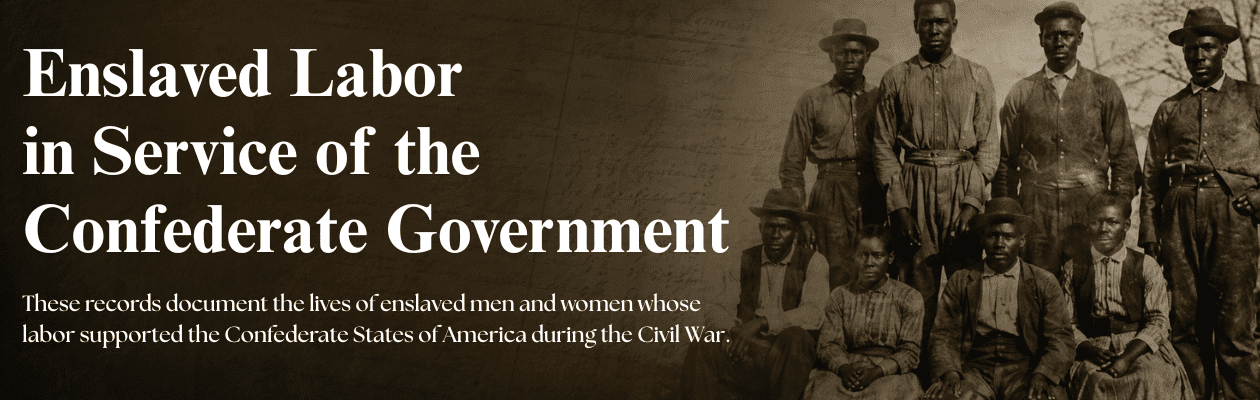
Impressment: The Forced Labor of Enslaved and Free Black People in Service of the Confederate Government
Impressment was one of the Confederate government’s most important yet least understood labor systems. Through state laws, Confederate legislation, military orders, and county court directives, thousands of enslaved and free Black men were forced into service to support the Confederate war effort.
Military and civil authorities compelled these laborers to build fortifications, repair railroads, construct roads and bridges, drive wagons, cook for soldiers, work in hospitals, manufacture supplies, and perform countless other essential duties. Many free Black men were also ordered into labor through county and military authorities, despite being prohibited from serving as soldiers.
Important Research Note
Researchers should be aware that free persons of color living in Confederate states may appear in Confederate military and government records even though they were not soldiers. Through impressment laws, county court orders, military directives, and other forms of compulsory service, enslaved and free Black men could be forced to perform labor in support of the Confederate government.
As a result, descendants may discover ancestors in Confederate payrolls, labor records, court orders, pension applications, and other government documents despite no evidence of military enlistment.
APPEARANCE IN A CONFEDERATE MILITARY OR GOVERNMENT RECORD DOES NOT NECESSARILY
INDICATE MILITARY ENLISTMENT OR VOLUNTARY SERVICE.
The historical record makes clear that the vast majority of African Americans connected to the Confederate military served as enslaved or impressed laborers, not voluntary soldiers. Their forced labor provided the manpower that built and maintained much of the infrastructure upon which the Confederate government and its armies depended throughout the Civil War.
| Timeline of Major Impressment Laws and Orders | ||||||
| Date | State / Government | Law or Order | Significance | |||
| January 24, 1861 | South Carolina | Labor at Sullivan's Island | One of the earliest documented uses of enslaved labor constructing Confederate defenses. | |||
| January 1862 | Florida | State Impressment Law | First Confederate state to authorize the impressment of enslaved laborers for military purposes. | |||
| October 3, 1862 | Virginia | Public Defence Act | Authorized impressment of enslaved men between ages 18 and 45 for military fortifications. | |||
| Late 1862 | Alabama | State Impressment Law | Authorized seizure of enslaved labor for military projects before Confederate national legislation. | |||
| March 26, 1863 | Confederate States | Confederate Impressment Act | Created a national legal framework allowing the government to impress enslaved labor and other property. | |||
| Spring 1863 | North Carolina | State Labor System | Organized county quotas to supply enslaved laborers for Confederate engineering projects. | |||
| June 1863 | Texas | Impressment Bureau | General John Magruder established an impressment system for obtaining enslaved laborers for coastal defenses. | |||
| 1864 | Louisiana | State Regulation | Formalized military impressment procedures already in use. | |||
| 1864 | Mississippi | State Regulation | Regulated compulsory enslaved labor for Confederate infrastructure projects. | |||
| 1864 | South Carolina | State Regulation | Codified impressment practices that had existed since the beginning of the war. | |||
| March 13, 1865 | Confederate States | Black Enlistment Act | Authorized enlistment of Black soldiers only weeks before the Confederacy collapsed, after four years of relying on forced Black labor. | |||
| State Impressment Laws and Military Orders | ||||||
| Date | State | Authority | Summary | |||
| January 1862 | Florida | State Legislature | First Confederate state to pass an impressment law authorizing the seizure of enslaved labor for military purposes. | |||
| October 3, 1862 | Virginia | General Assembly | Authorized impressment of enslaved men and later compulsory labor by many free Black men. | |||
| 1862 | Alabama | Legislature | Authorized military impressment before Confederate legislation. | |||
| 1863 | North Carolina | Legislature | Established county quotas for impressed enslaved laborers. | |||
| June 1863 | Texas | Military Bureau | Created district impressment bureaus under Gen. John Magruder. | |||
| 1864 | Louisiana | Legislature | Regulated existing impressment practices. | |||
| 1864 | Mississippi | Legislature | Established procedures for military labor impressment. | |||
| 1864 | South Carolina | Legislature | Codified impressment already widely practiced around Charleston. | |||
Historical Reflection
The Confederate war effort depended heavily on the forced labor of both enslaved and free Black men who were impressed into military service through state laws, Confederate legislation, military orders, and county court directives. Although they were not soldiers, their labor built fortifications, maintained railroads, transported supplies, and sustained Confederate armies throughout the Civil War.
This database is dedicated to documenting, remembering, and preserving their names, their stories, and their contributions to history.
“History often records those who commanded the armies. This project honors the thousands of enslaved and free Black laborers whose forced service sustained the Confederate government and preserves their names so they will never be forgotten.”
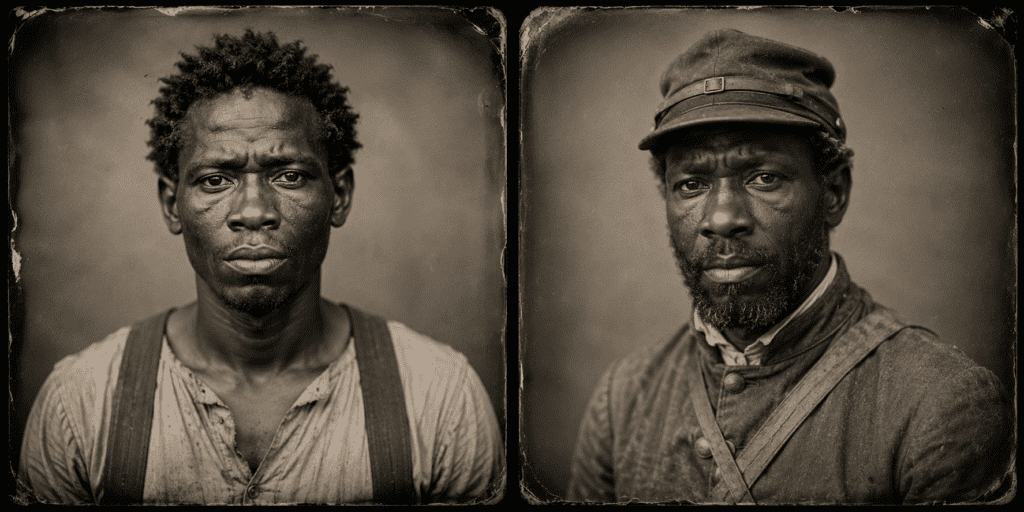
- What You'll Find
- ➡️ Payrolls & requisition list
- ➡️ Names, ages, occupations, & owners
- ➡️ Locations of labor and assignments
- ➡️ Dates of Service
- ➡️ Historical context and research links
- ➡️ Pension applications & witness testimony
- HISTORICAL NOTE
The records on this page document enslaved men and women who were compelled or hired through enslavers to perform labor for the Confederate government during the American Civil War. They served as laborers, cooks, teamsters, blacksmiths, body servants, hospital workers, and engineers, among many other support roles.
With very limited and exceptional circumstances at the very end of the war, Black men and women were not accepted as enlisted Confederate soldiers. The overwhelming majority of individuals documented in these records were enslaved laborers or civilian workers rather than military personnel. This page preserves their names and honors their contributions to history through documented records.
| Key Record Collection & Resources | ||||
| Description | Link | |||
| Alabama Department of Archived & History - Civil War Service Database | Open | |||
| Ancestry.com - U.S., Confederate Army Payrolls for Enslaved Labor, 1840-1883 | Open | |||
| FamilySearch - Confederate Quartermaster and Corps of Engineer Payrolls for Enslaved Labor, 1874–1899 (Records from the following states are represented in the collection: Alabama Florida Georgia Louisiana Mississippi North Carolina South Carolina Tennessee Texas Virginia) | Open | |||
| FamilySearch - Mississippi, Confederate Veterans and Widows Pension Applications | Open | |||
| Mississippi Department of Archives & History - Confederate Pension Rolls, 1889-1935 Series 0354 | Open | |||
| Mississippi Department of Archives & History - County Confederate Pension Reports and Correspondence Series 0355 | Open | |||
| Mississippi Department of Archives & History - Confederate Pension Reports and Correspondence Series 1201 | Open | |||
| NARA - Confederate Quartermaster and Corps of Engineer Payrolls for Enslaved Labor, 1874–1899 (Records from the following states are represented in the collection: Alabama Florida Georgia Louisiana Mississippi North Carolina South Carolina Tennessee Texas Virginia) | Open | |||
| NARA - Engineer Department - Letters Sent by the Engineer Office of the Department of Alabama and West Florida, April - May 1862; Lists of Enslaved Persons from Alabama and Mississippi Working on Entrenchments at Mobile, Alabama, 1862 - 1863 | Open | |||
| NARA - Enslaved Women of the Confederate Nitre Works (Document) | Open | |||
| North Carolina Digital Collection - 1885 Confederate Pension Applications | Open | |||
| North Carolina Digital Collection - 1901 Confederate Pension Applications | Open | |||
| Roanoke College, Va (Center for Studying Structures of Race) - Requisition and Payroll Records | Open | |||
| WikiTree - Confederate Slave Payrolls (Records from the following states are represented in the collection: Alabama, North Carolina, and Virginia) | Open | |||
Confederate Pensions
Confederate pensions are not included in federal pensions issued by the U.S. government. Confederate veterans and their dependents were not eligible for federal pensions, since the Confederate States were in rebellion against the Union during the Civil War.
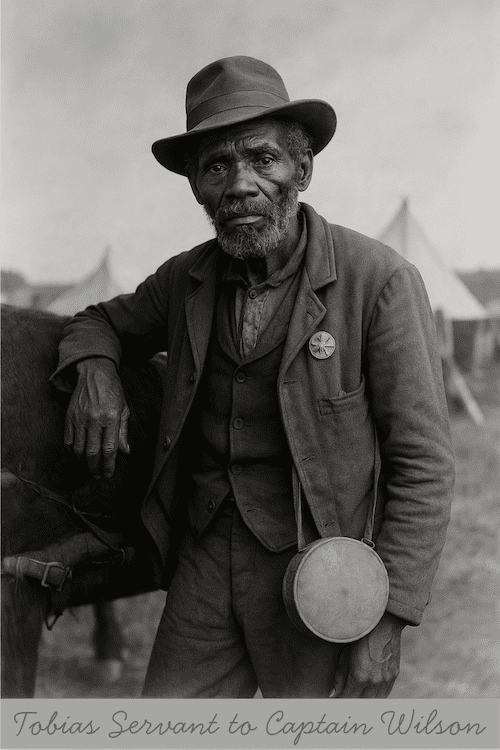
Tennessee - Colored Man's Application for Pension
This page documents the experiences of enslaved men and women whose labor supported the Confederate Army during the American Civil War. These individuals were generally not enlisted soldiers, but were compelled or hired through enslavers to work as laborers, teamsters, cooks, body servants, blacksmiths, hospital workers, and in other essential roles. The records presented here preserve their names and provide valuable genealogical evidence for descendants and researchers.
- Occupations Found in Applications
- ➡️ Body Servants
- ➡️ Cook
- ➡️ Teamster
- ➡️ Blacksmith
- ➡️ Wagon Driver
- ➡️ Hospital Worker
- ➡️ Messenger
- ➡️ Laborer
- ➡️ Forager
- ➡️ Orderly
- ➡️ Porter
- ➡️ Miller